
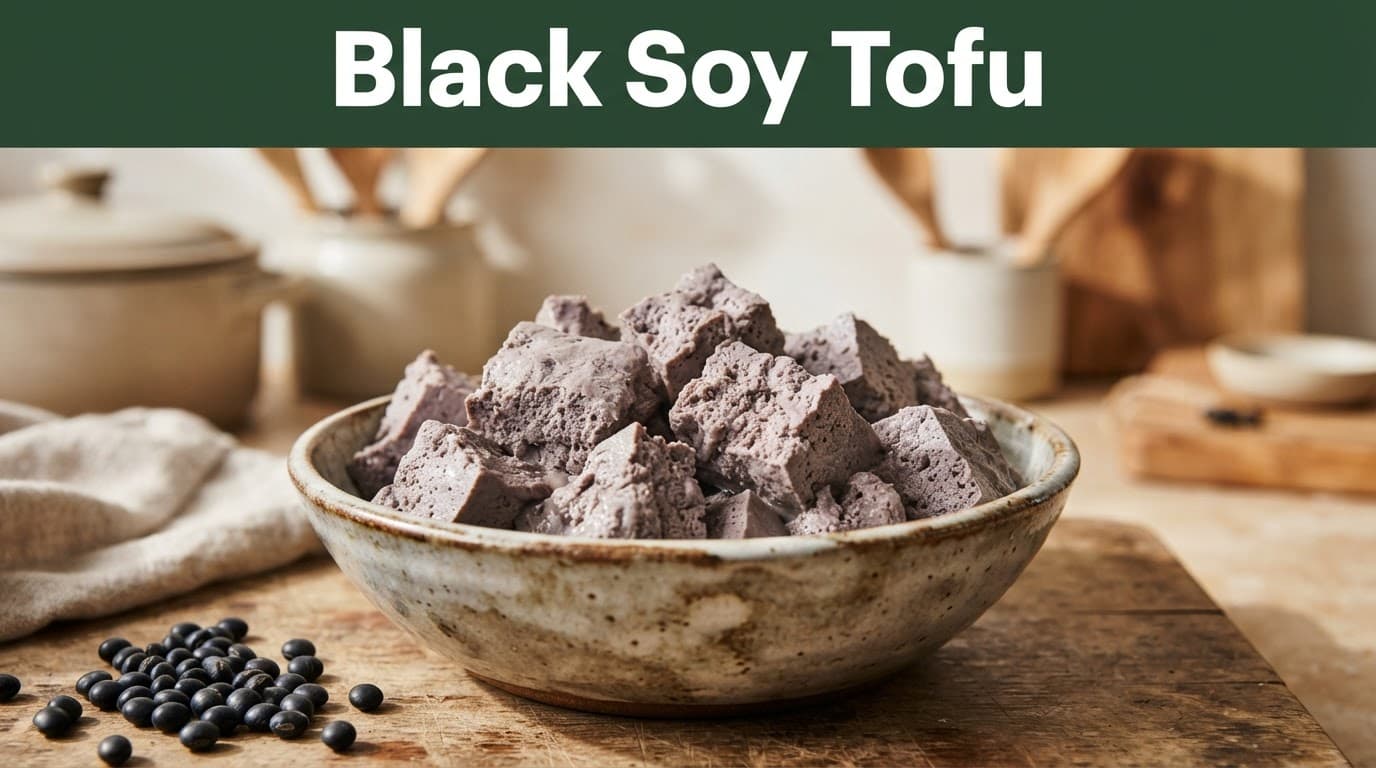
Homemade black soybean tofu has a flavor and texture that regular white tofu can’t quite match. The finished curds are firm, springy, pleasantly chewy, and naturally tinted purple-gray, with a nuttier soybean flavor in every bite.
This is a small-batch project that takes overnight soaking, but the active work is simple: blend, strain, heat, curdle, drain, and chill. A high-speed blender, a cloth-lined colander, and a little patience do most of the heavy lifting.
Why Black Soybean Tofu Is Worth Making
Black soybeans make tofu with character. Their dark skins give the soy milk and curds a muted grayish-purple shade, while the beans create a more robust flavor than familiar supermarket tofu.
The color may look unexpected at first, especially if you’re used to snow-white tofu blocks. However, that natural color is part of the fun. Once it hits a sizzling skillet, a saucy curry, or a boldly seasoned noodle bowl, the texture and flavor take center stage.
What black soybean tofu tastes like
Fresh black soybean tofu tastes savory and nutty, with a fuller bean flavor than standard tofu. Its texture is also noticeably different: firm, spongy, bouncy, and a little chewier.
That sturdiness makes it a great choice when you want tofu that won’t vanish into a dish. Tear it into rough pieces for a rustic look, crumble it into a filling, or cut it into chunks for pan-frying.
A note on heirloom and non-GMO beans
Some black soybeans are sold as heirloom varieties, and many packages may be labeled non-GMO. Still, those details depend on the particular product, so check the package rather than assuming every bag has the same status.
Black soybeans are available at many Asian grocery stores. They are also used in Burmese food, often in fermented preparations. Here, they become something completely different: fresh, satisfying tofu with a wonderful bite.
Ingredients and Equipment for One Small Batch
Start with one cup of dried black soybeans. It yields a manageable amount of fresh tofu and gives you a chance to learn how the curds behave without filling the kitchen with pots and dishes.
For nutrition details on soybeans and other ingredients you cook with often, the USDA FoodData Central food search is a useful reference.
What you’ll need
- 1 cup dried black soybeans
- 2 cups water for soaking
- 4 cups fresh water for blending
- 2 tablespoons food-grade gypsum
- 4 tablespoons water for dissolving the gypsum
Food-grade gypsum is the preferred coagulant in this method because it also adds calcium. It must be clearly marked food-grade. Do not use gypsum intended for gardening, construction, or crafts.
Lemon juice or vinegar can also curdle soy milk. Those acidic coagulants may change the flavor and texture, though, so expect a different result than the firm, bouncy tofu made with gypsum.
Kitchen tools that make the process easier
You’ll also need a high-speed blender, a large pot, a wooden spoon or heat-safe spoon, a colander or fine strainer, two clean dishcloths or cheesecloth, a large bowl, and a lid for the pot.
Keep a small heavy object nearby for pressing the tofu. A clean jar, can, or small pot works well. Since the soy milk and curds get extremely hot, set up your straining area over the sink or in a heat-safe space before you start cooking.
Soak, Blend, and Strain the Soybeans
The first part of the recipe turns dried beans into fresh black soybean milk. Give the beans enough time to absorb water, because fully hydrated beans blend more smoothly and release more liquid.
Soak the beans overnight
Rinse 1 cup of dried black soybeans, then place them in a bowl with 2 cups of water. Leave them to soak overnight until the beans are fully plumped and hydrated.
The next day, drain away the soaking water. Add the soaked beans to a high-speed blender with 4 cups of fresh water, then blend until the mixture is as smooth as possible. It may look dark, grayish, and foamy. That’s normal.
Separate the soy milk from the okara
Line a colander with two clean dishcloths or a layer of cheesecloth, then set it over a large bowl. Pour in the blended soybean mixture and use a spoon to press liquid through the cloth.
Once most of the liquid has drained, gather the cloth around the pulp and squeeze gently but firmly to extract more soy milk. The liquid in the bowl is your tofu base. The pulp left behind is called okara.
Black soybean okara may be grayish in color, but it is still a useful, fiber-rich ingredient. Save it for crackers, baked goods, savory patties, or compost.
Don’t rush the squeezing step. More soy milk means more tofu, and a careful squeeze takes only a few minutes.
Heat the Soy Milk and Form the Curds
Cooking the strained soy milk calls for attention rather than high heat. Stir it regularly and keep the pot on medium-low so the milk doesn’t stick or scorch on the bottom.
Warm the soy milk gently
Pour the strained soy milk into a large pot. Heat it gently over medium-low heat, stirring often with a spoon.
Stay close to the stove. Soy milk can foam, catch on the bottom, or boil over if left alone. The goal is to heat it steadily without burning it, then add the coagulant while the milk is hot.
Meanwhile, mix 2 tablespoons of food-grade gypsum with 4 tablespoons of water. Stir or blend the mixture so the gypsum is evenly dispersed before it goes into the pot.
Add gypsum slowly and stir with a light hand
Once the soy milk is hot, slowly pour in the gypsum mixture a little at a time. Stir gently as you add it. Avoid vigorous stirring because rough movement can break the forming curds into smaller pieces.
After the gypsum is incorporated, turn off the heat and cover the pot. Let the mixture sit so the curds can separate from the liquid.
The tofu is ready for draining when the curds are visibly clumped and the remaining liquid looks mostly clear or pale instead of cloudy. If the liquid still looks milky, rewarm the pot briefly and give it more resting time. Gentle handling produces firmer tofu.
Drain, Press, and Chill the Fresh Tofu
Once the curds have separated, move quickly but carefully. Hot curds hold a lot of heat, and the pot, cloth, and draining liquid can all cause burns.
Drain the curds carefully
Line the colander again with a clean dishcloth and place it over the sink or a large bowl. Slowly pour the hot tofu curds into the cloth-lined colander, letting the liquid drain away.
The tofu should already look firmer than many homemade yellow soybean tofus. Its darker color and chewy structure are part of what makes this batch so appealing.
Fold the cloth over the curds once most of the liquid has drained. You don’t need a perfect square block if you plan to tear or crumble the tofu later.
Press out excess water
Place a light weight on top of the wrapped tofu to press out extra moisture. More pressing creates a firmer texture, while a lighter press leaves the tofu softer and more delicate.
Let the tofu cool, then refrigerate it. If you’d prefer a traditional rectangular block, pack the cloth-lined curds into a tofu mold or small container before adding the weight. Otherwise, leave it loose and rustic. Those irregular pieces are perfect for hearty vegan meals.
Store and Cook Black Soybean Tofu
Fresh homemade tofu doesn’t have the long shelf life of sealed store-bought packages. Keep it cold, handle it with clean utensils, and use your senses before cooking.
Keep it refrigerated and use it promptly
This tofu is best used within 1 to 2 days. You can also store it submerged in brine if you want to hold it longer.
Freezing wasn’t tested for this particular recipe, so treat refrigerated use as the reliable option. Discard tofu that develops a sour smell, slimy surface, or unusual mold.
Put that firm, bouncy texture to work
Black soybean tofu holds up beautifully in dishes that need more chew. It can take assertive seasonings, too, because its nutty flavor doesn’t disappear behind garlic, ginger, chiles, fermented sauces, fresh herbs, or toasted spices.
Try it in one of these easy preparations:
- Pan-sear torn pieces until the edges brown, then finish them with soy sauce, ginger, and a little sesame oil.
- Add chunks to a spicy curry near the end of cooking so they absorb sauce while keeping their texture.
- Marinate thicker pieces and grill them until lightly charred.
- Crumble the tofu into tacos, rice bowls, noodle dishes, or a savory breakfast scramble.
- Use it for meal prep when you want a sturdy plant-based protein that reheats well.
Fix Common Black Soybean Tofu Problems
Homemade tofu gets easier with each batch. Small changes in soaking, stirring, and pressing can make a big difference in the final texture.
If the soy milk won’t separate cleanly
Cloudy liquid after adding the gypsum usually means the curds need more resting time or a little more gentle heat. Cover the pot, wait, and avoid stirring the mixture aggressively.
Beans that haven’t soaked long enough can also make blending and extraction harder. Soak them overnight until they are fully hydrated, then blend thoroughly with fresh water.
If the tofu feels too soft or breaks apart
Soft tofu can result from weak coagulation, too little pressing, or stirring the curds too much after adding the gypsum. Mix the coagulant slowly, stop stirring once it is distributed, and let the curds form undisturbed.
Scorched soy milk is another avoidable problem. Keep the heat moderate, stir often before curdling begins, and use a pot with enough room for the milk to foam.
Natural color variation is expected. Some batches may look more purple, while others may lean gray, depending on the beans. Focus on clear whey, formed curds, and a firm texture rather than chasing a particular shade.
A Small Batch With Big Flavor
Black soybean tofu turns a humble cup of dried beans into fresh vegan protein with a rich, nutty flavor and a playful purple-gray color. Its firm, chewy texture makes it especially satisfying in saucy curries, crisp-edged skillet dishes, and boldly seasoned bowls.
Save the okara, use food-grade gypsum with a gentle hand, and give the curds time to settle before pressing. One small batch of homemade black soybean tofu is enough to make this unusual, delicious ingredient part of your regular kitchen routine.