
A really good biryani is something that I was known for before I went vegan…and suddenly I could no longer eat it, nor did I want to. I clearly recall the divine fragrance of caramelized onions and saffron infused in the basmati rice, the buttery mouthfeel and the little surprises packed into each bite. I realized I could recreate the joy…with patience and ingenuity. This jackfruit biryani is built in layers. There is the deeply browned onion curry, the fragrant saffron basmati rice, the young jackfruit that has been seasoned and roasted before it ever touches the sauce. Then comes the final flourish: more golden onions, sweet raisins and roasty pistachios.
This is not a quick dinner, and it is not trying to be diet food. It is a celebration dish. Give it time, put on something you enjoy, have a cup of tea and enjoy the process. The patience is part of what makes it magnificent.
The method here finishes with dum cooking: hot rice and curry are layered in an oven-safe pot, sealed with dough and baked so the trapped steam finishes the rice and brings the flavors together.
Table of Contents
- What You’ll Learn
- Gather the Ingredients in Layers
- 1. Season the Young Jackfruit
- 2. Prepare the Garlic and Ginger
- 3. Build a Deeply Browned Onion Curry
- 4. Bloom the Saffron and Partially Cook the Basmati
- 5. Make the Dough Seal and Layer the Biryani
- 6. Fry the Festive Onion, Raisin and Pistachio Topping
- Serve It Generously, Right Through the Layers
What You’ll Learn
- Use young jackfruit and dry it out before simmering it in the onion curry.
- Slowly browned onions build the curry’s depth and provide a distinct, crisp topping.
- Bloom saffron separately and leave the basmati slightly undercooked before layering.
- Seal hot rice and curry with dough to finish cooking in trapped steam.
Gather the Ingredients in Layers
I like to organize everything by the part of the dish it belongs to. The quantities below are approximate, particularly the seasonings. Taste as you go, especially because canned jackfruit, soy sauce and bouillon can all contribute salt.
The small pot assembled here is intended for roughly two people. That is a guide to the assembled portion, not a precise yield for the entire batch of rice and curry. The jackfruit quantity and the flour quantity for the seal are not measured by weight in this method.
For the seasoned jackfruit
- Young jackfruit packed in brine, drained
- About 2 teaspoons salt, adjusted for the saltiness of the jackfruit
- 1 generous teaspoon garlic powder
- About 2 teaspoons paprika
- Pumpkin seed oil, enough to coat the pieces
For the onion and jackfruit curry
- 5 onions, peeled and sliced
- 5 to 6 garlic cloves, chopped
- A little more than 2 thumb-sized pieces of ginger, peeled and finely diced
- About 3 tablespoons sunflower oil to start, with more if needed
- 2 to 4 dried red chilies
- 3 black cardamom pods, crushed
- 1 cinnamon stick
- 2 to 3 whole cloves
- About 2 teaspoons cumin seeds
- About 1 teaspoon turmeric
- About 2 teaspoons salt, adjusted to taste
- About ½ cup diced tomatoes, or roughly 1 fresh tomato
- About 2 teaspoons soy sauce, optional
- 1 teaspoon vegetable or mushroom bouillon
- About 1 cup water for simmering, plus small splashes for loosening the pan
For the saffron rice and dough seal
- 2 cups basmati rice
- 2 to 3 tablespoons sunflower oil
- Several strands of saffron, adjusted for its strength
- 1 cup boiling water for blooming the saffron
- Additional water to bring the rice cooking liquid to about 4 cups total
- About 2 teaspoons salt, adjusted to taste
- A couple of cardamom pods
- 1 bay leaf
- Flour and water, enough to make a thick dough cover for your pot
For the festive topping
- Another generous batch of sliced onions, roughly the same amount used in the curry
- Sunflower oil, enough to fry the onions well
- About ½ cup golden or dark raisins
- About ½ cup pistachios, or your preferred nuts or seeds
1. Season the Young Jackfruit
Use young jackfruit, not ripe jackfruit. Ripe jackfruit is sweet, and that sweetness is not what we want in this savory curry.
Drain off the brine. It may have a pleasant salty flavor, but we do not need that extra liquid when the next step is to dry out the jackfruit.
Put the drained pieces into a bowl with the salt, garlic powder and paprika. The paprika adds a lovely color. Add enough pumpkin seed oil to coat everything; I particularly like its robust flavor here.
Massage the seasonings into the jackfruit and leave it for about 15 minutes. This is a dry-style marinade, without a pool of liquid around the pieces.
While it rests, prepare the onions, garlic and ginger. There are a lot of onions in this dish, and that is very much intentional. They provide much of the finished biryani’s depth.
2. Prepare the Garlic and Ginger
Peel the ginger by trimming away the little protruding ends and scraping off the skin. Slice it thinly, stack the slices, cut them into narrow strips and then dice them into very small pieces.
You do not need perfect knife work, but you do want a fine chop. Large pieces of ginger can be quite assertive in a mouthful. Smaller pieces spread that flavor more gently through the curry.
A grinder is an option, too. I find chopped ginger gives a slightly different flavor experience from a paste, with more noticeable little bursts of ginger. Garlic softens into the sauce readily, so it does not need quite the same fine chopping.
Ginger is often associated with digestive and anti-inflammatory benefits, but its job in this recipe is first and foremost flavor. For a grounded look at the health evidence, the National Center for Complementary and Integrative Health’s ginger guide is a useful reference.
3. Build a Deeply Browned Onion Curry
Heat about 3 tablespoons of sunflower oil in a wide, open pan. A neutral oil lets the aromatics take center stage, and a broad pan gives the onions room to cook.
Do not be too timid with the oil. You want the onions and spices well coated, and you can add more if the pan needs it.
- Start with the whole spices. Add the dried red chilies, crushed black cardamom, cinnamon stick, cloves and cumin seeds to the hot oil. Let them sizzle and release their aroma.
- Add the aromatics. Stir in the sliced onions, chopped garlic and finely diced ginger.
- Season the base. Add the salt and turmeric, then mix thoroughly.
- Lower the heat. The initial sizzle wakes up the spices. Now give the onions gentler heat and time to soften and brown.
This is the part that takes patience. Stir occasionally, make sure everything has room in the pan and allow the mixture to become soft and golden. Do not rush it just because the onions have lost their raw appearance.
If the mixture begins to stick, add a tiny splash of water and scrape up the browned goodness from the bottom. Repeat as needed. For this curry, we want the onions to break down into a soft, deeply flavored base.
Roast the jackfruit while the onions cook
Once the onions are softening and turning golden, cook the marinated jackfruit using either of these methods:
- Oven: Roast at 350°F for about 15 minutes, then check its dryness.
- Air fryer: Cook at 370°F for about 8 to 9 minutes, then check and extend the cooking if needed.
The important thing is the result, not just the timer. The jackfruit should be dried out before it goes into the sauce. In my air fryer, the first 8 minutes were not enough, so I gave it another 5 minutes.
Add a little tomato and quiet savory depth
Stir about ½ cup diced tomatoes into the browned onion mixture. We are not making a strongly tomato-forward curry. This modest amount adds a little sweetness and umami without taking over.
Taste for salt. If you like, add about 2 teaspoons soy sauce, followed by 1 teaspoon vegetable or mushroom bouillon. These are small additions, but they deepen the savory flavor beautifully without announcing themselves.
At this stage, the onion base should be very soft, almost a thick mash. That is exactly what we want.

Add the dried jackfruit and stir it through the sauce. Pour in about 1 cup water, lower the heat and let the curry simmer for approximately 30 minutes.
This is a patient, loving recipe. Give the jackfruit time in that sauce rather than hurrying straight to the layering stage.
4. Bloom the Saffron and Partially Cook the Basmati
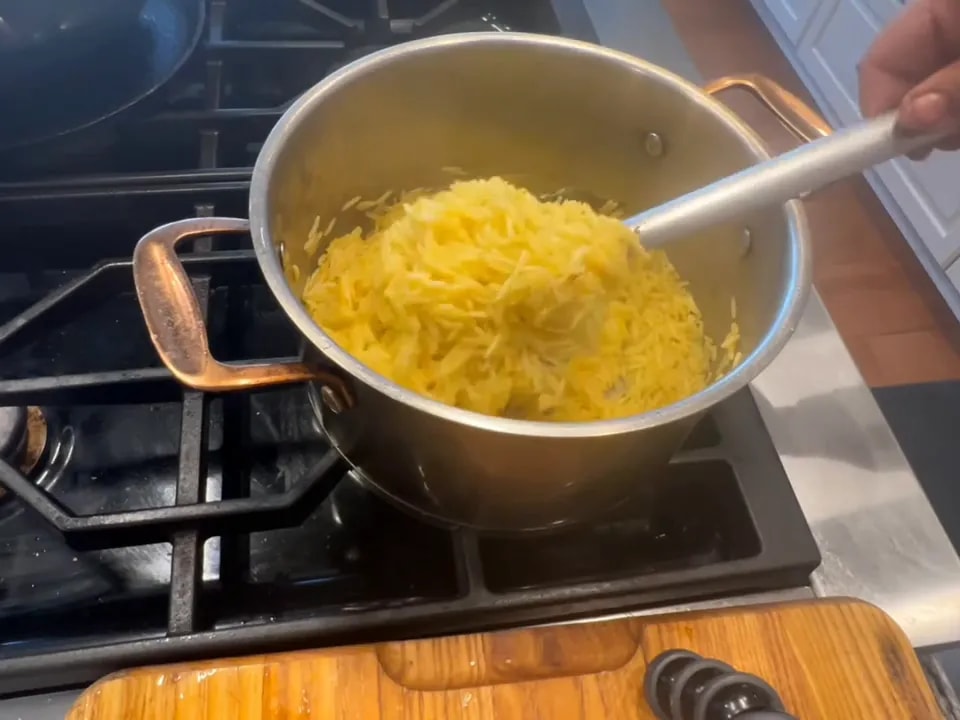
Put several saffron strands into 1 cup boiling water and let them bloom. The water should turn yellow, and you should be able to smell the saffron.
The amount needed depends on its strength and quality. Start with several strands, allow the infusion to develop and add a little more if it is weak. The color and fragrance are your cues.
In a separate pan, heat 2 to 3 tablespoons sunflower oil, enough to cover the bottom. Add 2 cups basmati rice and gently toast it, stirring so the grains are coated.
Basmati is important here because we want those beautiful long, separate grains. Toasting adds another lovely fragrance. Once the rice smells pleasantly toasty, add the salt, a couple of cardamom pods and a bay leaf.
Carefully pour in the saffron water, then add enough additional water to make about 4 cups liquid in total for 2 cups rice. The saffron infusion counts toward that total.
Bring it to a boil and let most of the water cook away. Do not finish cooking the rice completely on the stove. It should still have a slight al dente bite because the final cooking happens inside the sealed pot.
5. Make the Dough Seal and Layer the Biryani
While the rice cooks, mix flour with water to make a dough that holds together and sticks. The flour does not need to be special. I use rye because that is what I have on hand.
Add water gradually and work it into a cohesive dough. If you use whole-grain flour, give it about 5 minutes to hydrate before shaping it.
This dough is a steam-trapping cover, not the main attraction. Make enough to stretch across the opening of your oven-safe pot and attach firmly around the rim.
Build the layers while everything is hot
- Add a thin layer of saffron basmati rice to the bottom of the pot.
- Spoon in a thicker layer of jackfruit curry. For the small pot here, about three generous spoonfuls make a substantial filling.
- Add a little extra curry sauce.
- Cover with another layer of saffron rice.
Keep both the rice and curry hot during assembly. That way, steam begins collecting as soon as the dough cover goes on.
Flatten the dough into a thick round slightly larger than the pot’s opening. Lay it over the top and pinch it firmly onto the edges, working all the way around so steam cannot easily escape. Set the oven-safe lid over the sealed pot.
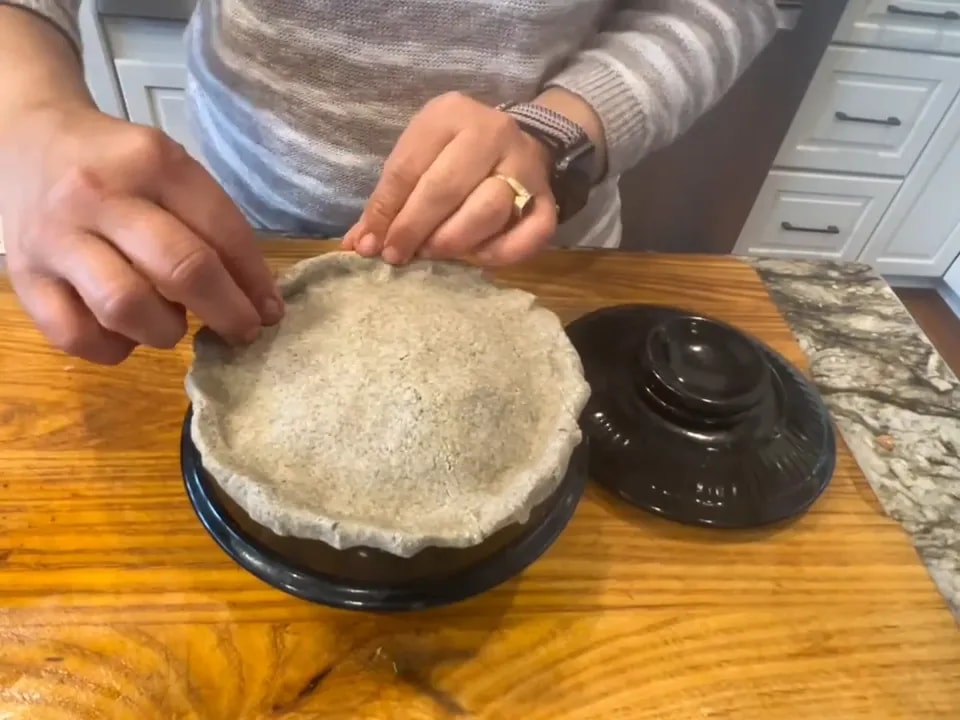
Bake at about 350°F for 40 minutes. This sealed steam-cooking stage is the dum part of the biryani.
6. Fry the Festive Onion, Raisin and Pistachio Topping
We are not done with the onions. While the biryani bakes, prepare another generous batch, roughly as much as went into the curry.
Yes, this is an onion-heavy dish. But the onions are not there to taste raw or sharp. They are there to become sweet, golden and deeply flavorful.
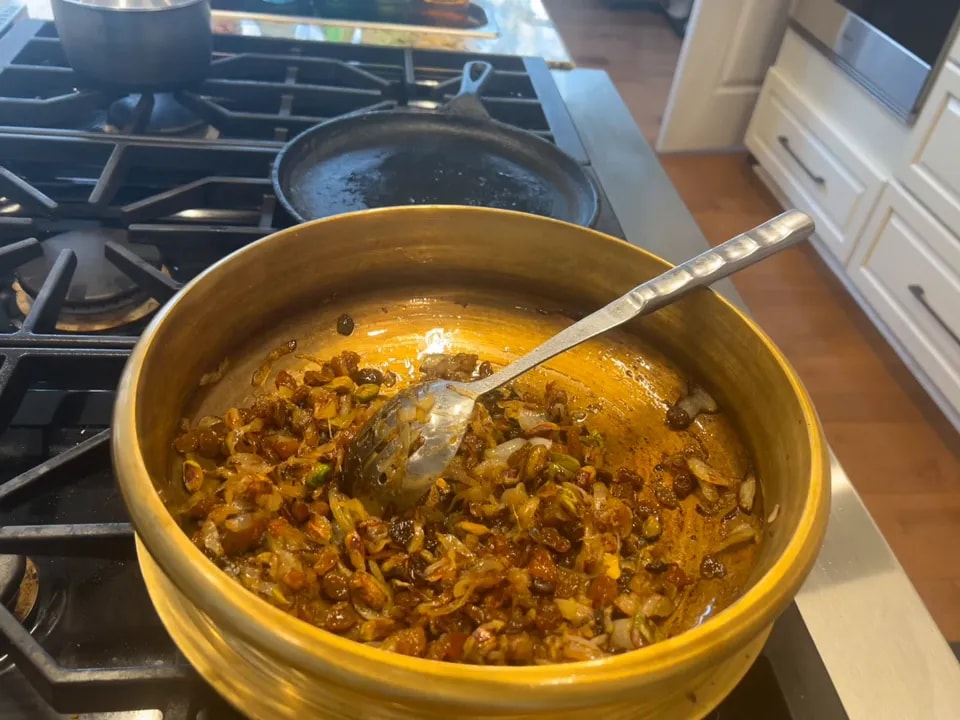
Heat plenty of sunflower oil in a wide pan, add the sliced onions and cook them slowly, stirring as needed.
There is one crucial difference from the curry base: do not add water. For the curry, soft, broken-down onions were the goal. For this topping, we want distinct golden onion pieces with a little crispness.
If they start sticking, stir more frequently, lower the heat or add a little more oil. Water will soften them and take the topping in the wrong direction.
Once the onions are beautifully brown, add about ½ cup raisins and ½ cup pistachios. Fry them briefly so the raisins plump and the nuts become pleasantly roasty.
You can make this topping your own:
- Use golden or dark raisins, whichever you prefer.
- Swap pistachios for cashews or sliced almonds.
- Use pumpkin seeds or melon seeds instead of nuts.
- Leave out the nuts if you prefer.
The idea is to be festive: sweet little bites, toasted crunch and plenty of gorgeous onions.
Serve It Generously, Right Through the Layers
Take the pot out of the oven, remove the lid and carefully peel away the dough seal, keeping your hands clear of the escaping steam. Underneath should be fragrant, steaming-hot saffron rice.
Spoon the onion, raisin and pistachio mixture generously over the top. Do not be shy with it. This topping is a big part of what makes the dish feel special.
When serving, dig all the way down. Each portion should include the topping, saffron rice and rich jackfruit curry, not just a scoop from the surface.
This vegan jackfruit biryani takes effort, but it rewards every bit of it. It is food for a celebration, a special evening in or a table where you want to share something made with care. Enjoy making it, and enjoy eating it.